The contrast between the firm Pleistocene deposits under Virginia Beach’s inland corridors and the compressible marsh clays along the Lynnhaven River shapes every excavation we monitor. A cut near Town Center stays open with predictable deformation, while a trench just 800 feet east hits organic silt and groundwater within six feet. That difference drives our instrumentation selection and alarm thresholds. We deploy inclinometers, load cells on tiebacks, and vibrating-wire piezometers as a single integrated network so the project engineer sees how the ground and the support system move together. For sites where the water table rises with every tide cycle, we often pair monitoring with a CPT test to map the soft lenses before the first bucket is lifted, and we tie the readings back to the slope stability model when the cut wall is steep and adjacent to existing utilities.
Monitoring is not observation—it is the real-time feedback loop that keeps a Virginia Beach excavation stable when the soil conditions change by the hour.
Service characteristics in Virginia Beach
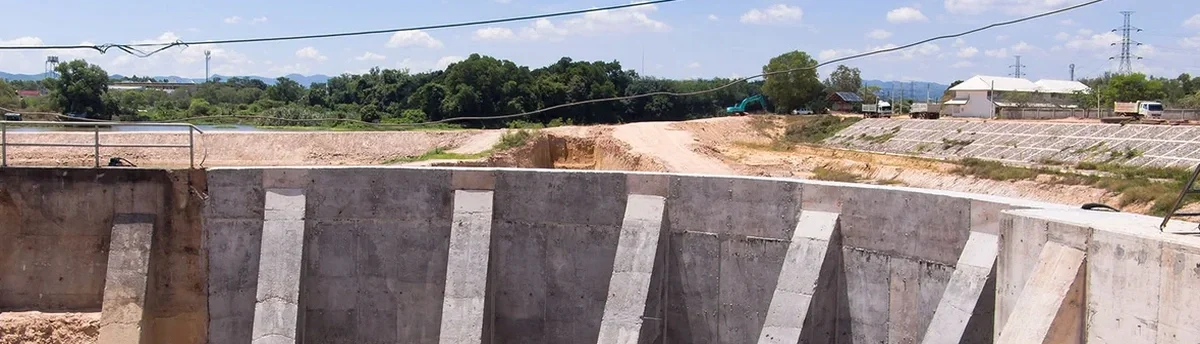
Local geotechnical conditions in Virginia Beach
One thing we see repeatedly in Virginia Beach is a contractor assuming the sandy stratum will stand on its own because it held up on a previous job in Chesapeake. That assumption fails when the sand is only four feet thick, underlain by soft clay, and the water table is at minus three feet. The wall doesn’t collapse immediately—it bulges slowly, and the first sign is often a pavement crack 30 feet behind the edge. Without continuous inclinometer casing and frequent piezometer readings, that movement goes unnoticed until it is expensive to fix. Another hazard is vibration from vibratory sheet driving near aging concrete structures; we add seismographs and set peak particle velocity limits per AASHTO when the excavation is within 50 feet of a sensitive receptor. Ignoring the tidal influence on pore pressure is the quickest way to lose a night’s sleep on a deep cut in this city.
Our services
Our monitoring programs cover the full excavation lifecycle, from baseline surveys before the first cut through backfill verification. Every instrument is calibrated in-house and installed by the same crew that reads it.
Inclinometer & ShapeArray Monitoring
Vertical and horizontal displacement profiles updated daily, with alarms set at 50% of design movement.
Vibrating-Wire Piezometers
Pore-pressure tracking in multiple aquifers, critical for dewatering verification and base stability.
Optical Survey & Crack Gauges
Automated total station networks and digital crack meters on adjacent structures with 15-minute read cycles.
Vibration & Noise Monitoring
Seismographs and sound-level meters placed per AASHTO limits, with real-time alerts for exceedances.
Quick answers
How often are the instruments read during a deep excavation in Virginia Beach?
Standard frequency is daily for inclinometers and piezometers during active digging, shifting to twice per week after the base slab is poured. Automated total stations and crack gauges read every 15 to 60 minutes depending on the risk classification defined in the monitoring plan. We increase frequency immediately after heavy rainfall or nor’easter events.
What does excavation monitoring cost for a typical commercial lot?
Programs for a single-basement commercial excavation in Virginia Beach usually range from US$900 to US$2,300 per month, depending on the number of instruments, read frequency, and whether automated reporting is required. A formal proposal follows a site walk and review of the excavation support drawings.
Which standard governs monitoring plan content in Virginia?
The monitoring plan follows IBC Chapter 33 requirements and the recommendations of the project geotechnical report. Instrument types, locations, reading frequencies, and alarm thresholds are specified before mobilization. OSHA Subpart P governs worker safety inside the excavation and is addressed separately from the structural monitoring scope.
Can you monitor an excavation that is already underway?
Yes, though the program is more valuable when started before the cut reaches half depth. We install inclinometer casing in a borehole drilled from the current bench elevation and set baseline readings immediately. Crack gauges and survey prisms on adjacent buildings can be added the same day to capture ongoing movement.