Virginia Beach sits on a dynamic coastal margin where Pleistocene-age barrier ridges meet Holocene marshes and back-bay silts. Ground investigation here means dealing with a shallow water table that fluctuates with the tide, loose dune sands, and pockets of organic clay deposited by the ancient Susquehanna River system. An exploratory test pit opens a window into these transitions: we can map the contact between clean beach sand and compressible peat in real time. For projects near the Lynnhaven River or along Atlantic Avenue, combining pit observations with a CPT test helps tie visual strata to continuous cone resistance profiles without losing the textural detail that only a logged excavation provides.
A single well-logged test pit can replace a dozen disturbed split-spoon samples when you need to see structure, not just index values.
Service characteristics in Virginia Beach
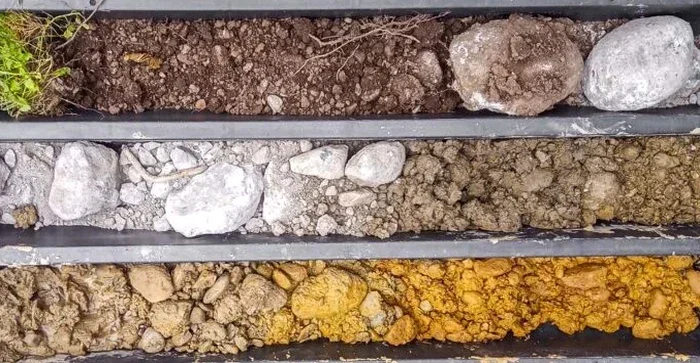
Local geotechnical conditions in Virginia Beach
The Atlantic Coastal Plain stratigraphy under Virginia Beach conceals buried paleo-channels filled with loose sand and soft organic silt. If a test pit hits one of these features, the bottom can boil within minutes as hydrostatic pressure pushes water through the sand column. That rapid instability collapses the walls before any useful log is recorded. Our protocol requires a stand-by pump and graded stone filter material on site; as soon as sand boils appear, we place a filter berm in the floor and switch to rapid sketch logging before water overwhelms the excavation. Ignoring the risk means losing the pit, delaying the investigation, and potentially missing the weakest stratum that governs foundation design.
Our services
Each subsurface exploration program in Hampton Roads starts with defining what question the test pit must answer. Our field team adjusts the approach based on whether the concern is bearing capacity, shrink-swell potential, or lateral earth pressure for a seawall.
Stratigraphic Logging
Continuous photographic log of each pit wall with Munsell color notation, USCS classification, and structure mapping (cross-bedding, lenses, fissures).
In-Situ Density and Strength
Sand cone density tests on compacted fill layers and hand penetrometer or torque vane readings on cohesive cut faces to estimate undrained shear strength.
Disturbed and Undisturbed Sampling
Bulk samples for Proctor and CBR, block samples for shear strength, and Shelby tube samples from the pit floor for consolidation testing.
Groundwater Monitoring
Observation of seepage zones, measurement of stabilized water level, and installation of simple PVC standpipes through the pit bottom for short-term monitoring.
Quick answers
What do exploratory test pits cost in Virginia Beach?
A single exploratory test pit with excavator, field logging, sampling, and a brief report typically ranges from US$430 to US$830. The final number depends on depth, access constraints in neighborhoods like Sandbridge, and whether shoring or dewatering is needed during excavation.
How deep can a test pit go before shoring is required?
Per OSHA 1926 Subpart P, any excavation deeper than five feet in Virginia Beach soils classified as Type C requires a protective system. Our practice is to call for a trench box or properly sloped walls at four feet if the sand shows signs of raveling, which is common in the dune deposits along Shore Drive.
Can you sample below the water table from a test pit?
Sampling below the water table is possible but requires controlling inflow. We lower the water level with a trash pump, then quickly advance a Shelby tube or drive a split spoon from the pit floor. For deeper saturated zones, we pair the test pit with a CPT test or adjacent SPT boring to get undisturbed data without fighting constant seepage.