A three-story mixed-use building near the Oceanfront hit refusal at 45 feet during preliminary SPT drilling. The geotechnical report showed 20 feet of loose, saturated sand overlying stiff clay. This is a common profile in Virginia Beach, where the coastal plain deposits often lack the bearing capacity for conventional shallow foundations. Stone column design provides a reliable ground improvement alternative that reinforces the weak strata, increases bearing capacity, and accelerates consolidation. Our technical team develops column layouts, diameter, spacing, and depth based on site-specific parameters from CPT testing, matching the load transfer requirements of the structure without deep pile foundations.
Stone columns reduce post-construction settlement by transferring load to stiffer inclusions while maintaining drainage continuity in the improved soil mass.
Service characteristics in Virginia Beach
Key parameters we address in every design package:
- Area replacement ratio tailored to required settlement reduction
- Column length extending through the compressible layer into competent bearing stratum
- Radial drainage analysis for time-rate of consolidation in silty matrices
- Lateral bulging check under critical column stress
- Composite shear strength for global stability of embankments or footings
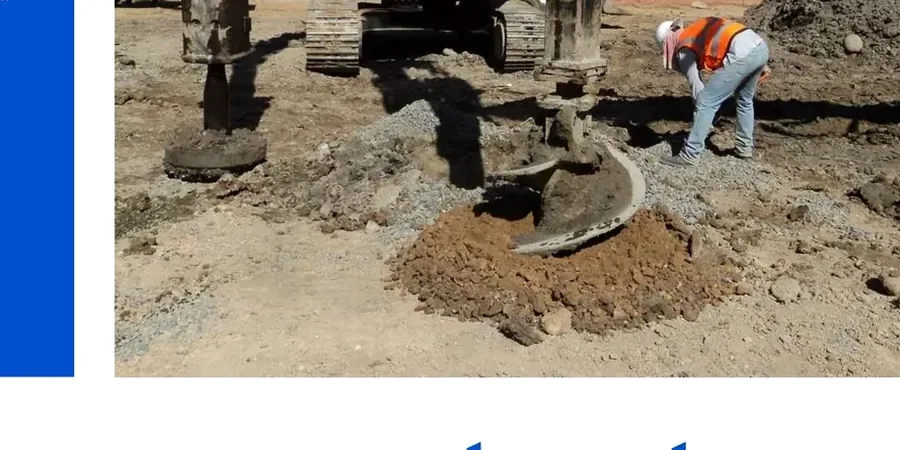
Local geotechnical conditions in Virginia Beach
The Virginia Beach coastal aquifer creates a risk that few general contractors anticipate: stone columns installed without a proper working platform over very soft soils can lose aggregate into the mudline, reducing the effective column diameter by 30% or more. We have observed cases near the Lynnhaven River where wet, bottom-feed installation methods without adequate casing led to necking at depths of 8 to 12 feet. This compromises the load-transfer mechanism and leaves the structure vulnerable to differential settlement. A detailed subgrade stability analysis must precede any installation. We also mandate post-installation CPT verification on at least 5% of columns to confirm continuity and diameter. Liquefaction-prone layers below the water table require a densification check against the target SPT N1(60) value specified in the seismic design parameters for Seismic Design Category D, which prevails across much of the city.
Our services
We deliver stone column design packages that integrate geotechnical investigation data with structural loading requirements. Each design is stamped by a licensed professional engineer in Virginia.
Unit Cell Settlement Analysis
We compute the composite modulus using the area replacement ratio and the constrained modulus of the native soil. The output is a settlement curve under design load.
Liquefaction Mitigation Design
Where loose sands fall below the CRR threshold for the project's design earthquake, we specify column spacing to achieve the target SPT N1(60) and reduce excess pore pressure generation.
Load Test Specification and Verification
We prepare single-column modulus tests and full-scale load test procedures, including acceptance criteria for deflection under 150% of design working load.
Quick answers
When are stone columns preferred over deep foundations in Virginia Beach?
Stone columns make sense when the compressible layer is less than 60 feet thick and the structure can tolerate total settlements up to 2 inches. They are often more economical than driven piles for lightly to moderately loaded buildings on loose sands or soft silts, especially when drainage and liquefaction mitigation are also required.
What is the typical cost range for stone column design and installation?
For a medium-sized commercial project in Virginia Beach, the combined design and installation cost typically ranges from US$1,640 to US$5,690. The final figure depends on column depth, grid density, and site access conditions.
How do you verify stone column performance after installation?
We specify post-installation CPT soundings through a minimum of 5% of the installed columns. The cone resistance profile must show continuity without soft inclusions. For critical structures, we also run plate load tests on isolated columns to measure the modulus of subgrade reaction directly.
Can stone columns prevent liquefaction in Virginia Beach coastal sands?
Yes, stone columns densify the surrounding soil during installation and provide drainage paths that limit pore pressure buildup during seismic shaking. The design must target a post-improvement SPT N1(60) value above the liquefaction threshold for the design earthquake magnitude, validated with in-situ testing.