Virginia Beach grew fast after the Chesapeake Bay Bridge-Tunnel opened in 1964, but the soil under all that development tells a much older story. Much of the city sits on the Atlantic Coastal Plain, where Pleistocene-age sediments, loose beach sands, and layers of soft organic silt create a challenging subgrade for rigid pavement. We see it in parking lots near the Oceanfront that crack within two years, and in industrial yards off Lynnhaven Parkway where slab curling becomes a maintenance headache. The problem isn't the concrete mix—it's what's underneath. Our rigid pavement design work starts with the subgrade. We pull samples, run classification, and determine the modulus of subgrade reaction (k-value) the right way—plate load tests on-site, not just correlations from CBR that miss the effect of groundwater three feet down. For heavy-duty applications like container yards near the port, we often combine this with a plate load test program to validate the design k-value directly.
In Virginia Beach, the subgrade reaction modulus isn't a number you pull from a table—it's something you measure, because the water table here changes the game.
Service characteristics in Virginia Beach
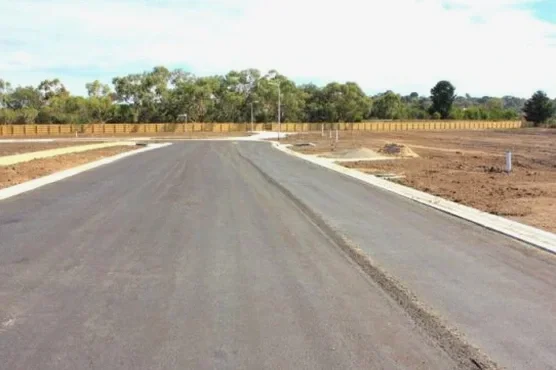
Local geotechnical conditions in Virginia Beach
The 2011 Mineral earthquake, centered over 100 miles away in Louisa County, was felt here as a gentle roll—but it reminded engineers that Virginia's seismic hazard isn't zero. For rigid pavement in Virginia Beach, the bigger risk is differential settlement from variable subgrade. A stretch of concrete roadway might cross three different soil units in half a mile: clean sand near the old dune line, compressible organic silt in a filled marsh, and stiff Yorktown Formation clay further inland. Without proper joint layout and transition details, that pavement will fault. We use plate load data and consolidation settlement estimates to design tied contraction joints and thickened-edge slabs where the subgrade transitions. Groundwater is another factor. The water table sits high across much of the city—often within two to four feet of the surface. Our rigid pavement design accounts for saturated subgrade conditions, reduced k-values, and the need for positive subsurface drainage to prevent pumping at joints under repeated truck loads.
Our services
We provide geotechnical support for rigid pavement design across the Hampton Roads region, from initial site characterization through construction verification. Here's what that looks like on a typical project:
Subgrade Reaction Modulus (k-value)
Field determination using 30-inch diameter plate load tests per ASTM D1196, conducted at proposed subgrade elevation. We perform multiple cycles to capture elastic rebound and provide a design k-value adjusted for seasonal moisture variation common in Virginia Beach's coastal soils.
Soil Classification and CBR Correlation
Laboratory testing per ASTM D2487, Atterberg limits, and soaked CBR. For low-volume roads and parking areas where plate tests aren't practical, we develop site-specific CBR-to-k correlations calibrated to local geological units—not generic conversion factors.
Pavement Thickness Design
Using PCA thickness design procedures and ACPA StreetPave software, we compute required slab thickness based on traffic loading, concrete flexural strength, and site-measured k-value. We provide joint layout plans with attention to transition details where subgrade conditions change.
Subgrade Stabilization Recommendations
Where soft organic soils or loose sands are encountered, we specify cement-treated subgrade, lime stabilization, or geogrid-reinforced aggregate subbase. We verify treatment effectiveness with post-construction plate load tests and density testing.
Quick answers
What's the typical cost for rigid pavement design on a commercial lot in Virginia Beach?
For a typical commercial rigid pavement project—say a parking lot or light industrial yard—the geotechnical investigation and pavement design package runs between US$1,860 and US$7,050, depending on the number of borings, plate load tests required, and whether subgrade stabilization recommendations are needed. A small retail site with uniform soils falls toward the lower end; a larger facility with variable coastal sediments and multiple plate load test locations runs higher.
What's the biggest mistake you see in rigid pavement projects around here?
Ignoring the water table. Virginia Beach has a shallow groundwater table across most of the city, and if you design the pavement assuming a dry subgrade, the k-value you assumed won't match reality after a wet winter. We see slabs pumping at joints, base erosion, and corner cracks within three to five years. Proper subsurface drainage design—edge drains, daylighted outlets, or even a permeable subbase layer—is non-negotiable for rigid pavement in this area.
Do you use the AASHTO or PCA method for rigid pavement design?
We use both, depending on the project. For municipal roadways and VDOT-related work, we follow the AASHTO 1993 rigid pavement methodology with VDOT-specific inputs. For commercial projects—parking lots, industrial yards, container storage areas—we prefer the PCA thickness design procedure and ACPA StreetPave, because they handle jointed plain concrete pavement and heavy axle loads more directly. We can deliver whichever the project specifications require.
How do you handle the variable soils along Virginia Beach's coastal plain?
We map the site geology first. Virginia Beach has a mix of Pleistocene beach sands, Holocene marsh deposits, and Tertiary-age Yorktown Formation clays—sometimes all on one site. Our investigation includes enough borings to delineate transitions between soil units, and we design the pavement with thickened-edge slabs or isolation joints where the subgrade type changes. If the variation is extreme, we specify a cement-treated subbase to create a uniform support condition and reduce differential movement.
What plate load test standard do you follow for k-value determination?
We run nonrepetitive static plate load tests per ASTM D1196 using a 30-inch diameter bearing plate. We test at the proposed subgrade elevation, at the top of subbase if one is specified, and we run at least two cycles to separate elastic rebound from permanent deformation. For critical projects—aircraft pavements, crane pads, heavy container yards—we may test at multiple locations across the site to capture spatial variability in the k-value.