Virginia Beach sits at an average elevation of just 12 feet above sea level, layered over unconsolidated Quaternary sediments of the Atlantic Coastal Plain. Tunneling here is not a rock mechanics problem. It is a soft ground problem. The subsurface profile across the city—from the Lynnhaven River basin to the Rudee Inlet area—consists of interbedded sands, silts, and highly compressible organic clays. Groundwater is typically within 4 to 8 feet of the surface. This combination makes geotechnical analysis for soft soil tunnels a prerequisite, not a formality. The team applies laboratory testing compliant with ASTM D2487 and field investigation protocols from ASTM D1586 to define the undrained shear strength and consolidation characteristics that govern face stability. Data from a CPT test often supplements the borehole logs to resolve thin silt seams that standard sampling misses. In a city with a population exceeding 450,000 and growing infrastructure demands, tunneling under existing utilities and residential zones requires precise subsurface models. Virginia Beach presents a specific challenge: the Yorktown Formation's variable cementation levels can shift within a few hundred feet, turning a soft clay face into a hardpan obstruction without warning.
In Virginia Beach, the difference between a successful tunnel drive and a surface depression is knowing the exact location of the paleochannel before the TBM arrives.
Service characteristics in Virginia Beach
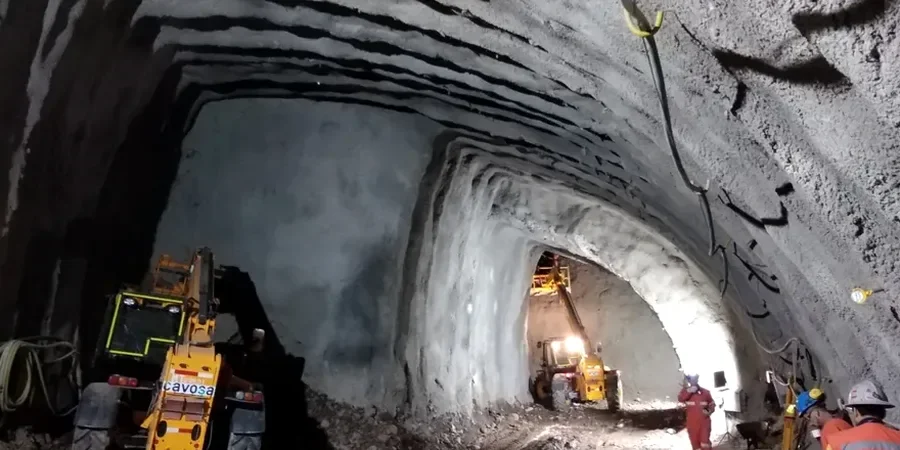
Local geotechnical conditions in Virginia Beach
The geotechnical conditions between the oceanfront resort area and the inland corridor near the Municipal Center differ drastically. Near the oceanfront, the upper 20 to 30 feet consist of clean, medium-dense sands with low cohesion. Tunneling here risks running-sand conditions and rapid groundwater inflow, requiring closed-face TBM operation and strict control of muck volume. In contrast, the landward side of the city transitions to deep deposits of soft, normally consolidated clay and organic silt. The risk shifts from inflow to long-term consolidation settlement and secondary compression. A tunnel alignment crossing from sand into soft clay within the same drive faces a mixed-face condition. This demands constant adjustment of the TBM's cutterhead torque and face pressure. The analysis quantifies these transitions using a geotechnical baseline report (GBR) that defines the expected ground behavior types and the contractual baseline for differing site conditions. We also assess the potential for heave at the tunnel invert during excavation in soft clay zones, a failure mode that can go unnoticed until the final lining shows cracking.
Our services
The work starts with a focused drilling and sampling program and extends into advanced numerical modeling to predict ground response.
Subsurface Investigation and Lab Testing
Directional drilling with SPT sampling and Shelby tubes. Lab program includes triaxial, consolidation, and grain size analysis to define the geotechnical design parameters for soft ground tunneling.
TBM Face Stability and Settlement Analysis
Analytical and finite element modeling of the tunnel face to determine the required support pressure. Prediction of surface settlement troughs and assessment of damage to adjacent structures.
Geotechnical Baseline Report (GBR)
Preparation of a contractual GBR defining the anticipated ground conditions, ground behavior types, and baseline parameters for the tunnel alignment. Essential for managing risk and defining the differing site conditions clause.
Quick answers
What is the typical cost range for a soft soil tunnel geotechnical analysis in Virginia Beach?
The fee depends on the length of the tunnel alignment and the number of borings required. A typical investigation for a short utility tunnel or pedestrian underpass in Virginia Beach ranges from about US$3,660 to US$14,720. This covers the drilling, lab testing, and the engineering report.
How deep do the borings need to be for a tunnel in soft ground?
Borings should extend at least one to two tunnel diameters below the proposed invert. In Virginia Beach, we often go deeper to penetrate the Yorktown Formation and confirm the absence of artesian pressure in the underlying confined aquifer.
Why is a CPT test useful alongside SPT borings for a tunnel alignment?
The CPT provides a continuous profile of tip resistance and pore pressure. In Virginia Beach's interbedded soils, this continuous data helps identify thin, weak silt seams that can be missed by SPT sampling at 5-foot intervals. These seams often control face stability.
What laboratory tests are essential for predicting settlement above a soft ground tunnel?
One-dimensional consolidation tests (ASTM D2435) are essential. They give us the compression index, recompression index, and coefficient of consolidation. We use these parameters to calculate the magnitude and rate of settlement due to groundwater drawdown and stress relief.