The Virginia Uniform Statewide Building Code, grounded in the IBC, requires a thorough geotechnical investigation before any foundation can be designed in the Coastal Plain province. In Virginia Beach, that mandate carries extra weight. The city sits at an average elevation of just 12 feet above sea level, where the subsurface shifts dramatically across short distances—from loose beach sands and soft organic silts near the Lynnhaven River to the stiffer Yorktown Formation clays further inland. Cone Penetration Testing, or CPT, cuts through the guesswork. Unlike traditional drilling, CPT pushes an instrumented cone into the ground at a constant rate, recording tip resistance, sleeve friction, and pore water pressure in real time. For builders and developers along the Atlantic coast, this data stream reveals exactly where bearing layers begin and where problematic compressible lenses hide, making the seismic microzonation a logical next step for larger planned communities requiring a broader site response analysis.
CPT resolves stratigraphic contrasts that standard penetration tests miss—crucial in Virginia Beach where 5 feet of soil change can redefine a foundation's load path.
Service characteristics in Virginia Beach
Local geotechnical conditions in Virginia Beach
With a population exceeding 459,000, Virginia Beach is the most populous city in the Commonwealth—and much of that growth pushes development onto marginal coastal lands. The biggest geotechnical risk here isn't just soft soil; it's differential settlement across short lateral distances, often driven by buried paleochannels filled with organic silt and peat that predate the modern shoreline. A single-family home built half on dense sand and half on compressible marsh deposits can experience angular distortion severe enough to crack slab-on-grade floors within the first five years. CPT provides the spatial resolution to map these channels accurately. By running a grid of soundings at 50-foot centers, we can construct a 3D subsurface model that highlights zones requiring ground improvement or deeper foundation elements, protecting the project's long-term value and the builder's reputation in the competitive Hampton Roads market.
Our services
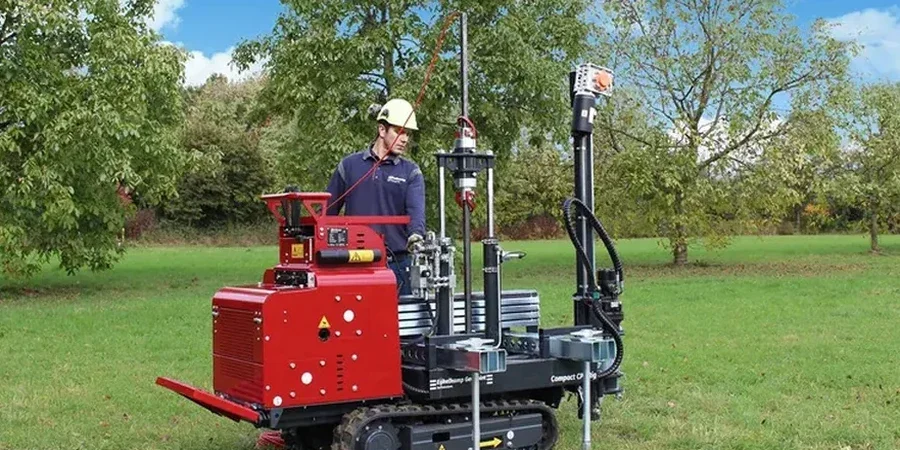
Our CPT services in Virginia Beach integrate directly with the full spectrum of geotechnical and foundation engineering tasks required for coastal construction. Each sounding generates parameters that our engineers use to calibrate settlement models, design earth retention systems, or plan ground improvement programs.
Piezocone Soundings
Standard CPTu with pore pressure measurement, including dissipation tests at specified depths to evaluate in-situ permeability and groundwater equilibrium conditions across the Atlantic Coastal Plain sediments.
Seismic CPT
Cone equipped with a geophone module to measure shear wave velocity (Vs) at 1-meter intervals, providing direct input for liquefaction assessments and site class determination per ASCE 7.
CPT for Deep Foundation Design
Application of LCPC and ICP methods to calculate unit shaft friction and end bearing for driven piles and drilled shafts directly from CPT data, eliminating the need for empirical SPT conversions.
Quick answers
What is the cost of a CPT test in Virginia Beach?
For projects in Virginia Beach, CPT soundings typically range from US$160 to US$280 per sounding, depending on depth, access conditions, and the type of cone module required (standard piezocone vs. seismic CPT). A full-day mobilization with multiple soundings offers better efficiency for commercial developments. Each proposal includes a site visit to confirm rig access and underground utility clearance.
How deep can a CPT rig penetrate in Virginia Beach soils?
Our 20-ton rigs can typically reach depths of 80 to 100 feet in the loose to medium-dense sands common to Virginia Beach. Penetration stops when the cone tip resistance exceeds 50 MPa consistently, which often occurs upon encountering the dense Yorktown Formation or a cemented shell hash layer. For deeper investigations, we recommend supplementing CPT with rotary wash borings.
Can CPT replace soil borings for foundation design?
In Virginia Beach's sandy coastal geology, CPT often provides superior stratigraphic detail compared to SPT borings alone. However, CPT does not recover physical soil samples. The IBC and geotechnical practice typically require at least one soil boring to correlate the CPT soil behavior type with laboratory classification tests. We design exploration programs that pair CPT soundings with select borings for a complete, code-compliant investigation.
How long does a CPT test take on a residential lot?
A single CPT sounding to 60 feet on a residential lot in Virginia Beach usually takes 45 to 90 minutes, including setup and dissipation testing. Most single-family home investigations with three to four soundings are completed in half a day. The preliminary data, including soil behavior type logs and engineering parameters, is available within 24 hours.